
Бары дерутся, а у холопов чубы трещат
Subordination

“Бары дерутся, а у холопов чубы трещат” can be translated to
”The lords are fighting, but the peasants' hair tufts are cracking” in English.
The proverb exists in a number of interpretations, with the word “бары” (lords, owners, masters) substituted with the Polish “паны,” along with a few other variations. All versions retain the same meaning: regular folks suffer while their masters, managers, generals, national leaders, etc. pick a fight.
This is a compound sentence (сложносочинённое предложение) – it consists of two independent clauses joined by the coordinating conjunction “а” (but/while).
Clause 1: “Бары дерутся” – simple subject + predicate.
Clause 2: “а у холопов чубы трещат” – conjunction + genitive phrase + subject + predicate.
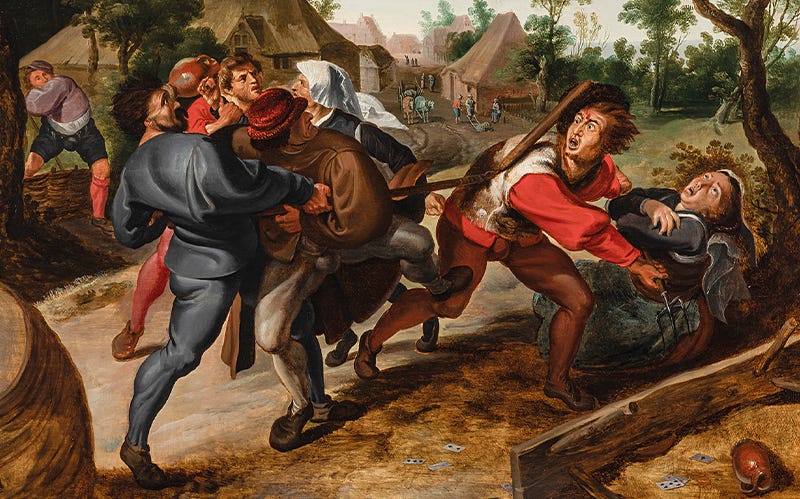
Peasants Fighting over a Game of Cards by Peter Paul Rubens
First clause: "Бары дерутся"
Бары - Lords, the upper class (noun, plural, subject)
The word “бары” is interchangeable with “баре” (plural), with both words being antiquated and used primarily in poetic or metaphorical contexts, or found in classic literature.
The plural forms are derived from “барин” (masculine) and “барыня” (feminine). Other derivatives include “барышня” (feminine; the lord’s daughter or “young lady”) and “барчонок” or “барчук” (the lord’s son, the latter also metaphorically stands for “a lazy, spoiled young person”).
Не равны бары, не равны и крестьяне. - В. Даль
The lords are not equal, neither are the peasants. - В. Dahl
Столетиями народ строил, создавал и всегда честно, даже на бар. - А. И. Солженицын
For centuries the people have been building, creating and always honestly, even for their masters. - A. I. Solzhenitsyn
Истинно славно, что всегда есть и будут хамы да баре на свете… - Ф. М. Достоевский
It is truly glorious that there are and will always be boors and lords in the world... - F. M. Dostoevsky
дерутся - fight, are fighting (verb, 3rd person plural, present tense, predicate)
Воробьи в кустах дерутся,
Светит солнце, снег, как пух. - Саша Чёрный
Sparrows in the bushes are fighting,
The sun is shining, the snow is like fluff. - Sasha Chorny
Second clause: "а у холопов чубы трещат"
а- but, while (coordinating conjunction)
Война гуляет по России,
А мы такие молодые! - Давид Самойлов
War is walking across Russia,
But we are so young! - David Samoilov
у - at, with (preposition, introduces the genitive construction, shows who is affected)
холопов - peasants, servants, serfs, slaves (noun, genitive plural, indirect object)
Nominative case: “холопы,” and also “холопья.” Both plural forms come from the singular masculine noun “холоп.” Similar to Romance languages, the plural “холопы” refers either to a group of men or to a mixed-gender group. The singular feminine form “холопка” forms the feminine plural “холопки” and refers to a group of female slaves or servants.
- Чей холоп, спрашиваю?
- Извините, но я вас не понимаю!
- У, сущеглупый холоп!
- Я извиняюсь, но что это вы всё холоп,да холоп! Что это за слово такое?
”Иван Васильевич меняет профессию,” Мосфильм 1973
(- Whose peasant, I am asking you?
- I'm sorry, but I don't understand you!
- You stupid peasant!
- I apologize, but why do you keep saying "peasant" and "peasant"? What kind of word is that?
Ivan Vasilyevich Changes Profession, Mosfilm 1973.)
Collocation “у холопов” can be translated as “the peasants have (their tufts cracking)” or “the peasants’ (tufts are cracking).”
чубы - hair tufts (noun, nominative plural, singular “чуб”, subject of the second clause)
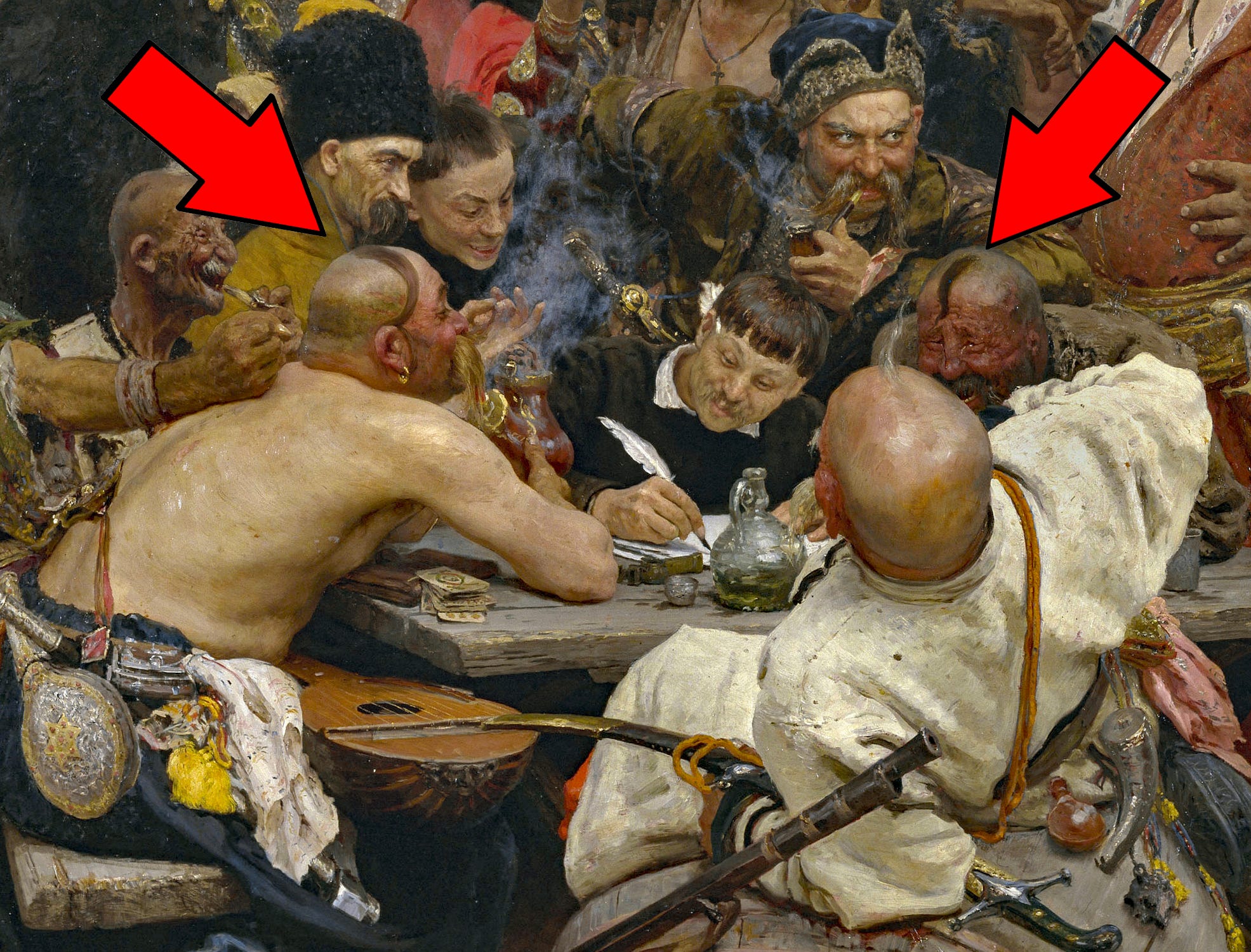
The tufts in question are the remnants of hair on the top of an otherwise clean-shaven head, as seen in this detail from Ilya Repin’s painting Reply of the Zaporozhian Cossacks to Sultan Mehmed IV of the Ottoman Empire.
Из-под папахи змеились длинные чубы, черневшие на бритых головах… - В. А. Гиляровский
(Long tufts snaked down from under their papakhas, blackened on shaved heads ... - V. A. Gilyarovsky)
трещат - crack, are cracking (verb, 3rd person plural, present tense, predicate)
Слышим мы: ходит, доски под ним так и гнутся, так и трещат… - И. С. Тургенев
(We hear as he walks, the boards under him bend and crack ... - I. S. Turgenev)
Чаще и чаще трещали нижние колья, и наконец плетень завалился вместе с солдатами, напиравшими на него. - Л. Н. Толстой
(More and more often the lower stakes cracked, and at last the wattle collapsed with the soldiers who were pressing on it. - L. N. Tolstoy)