
Чужие сани
Don't get into someone else's sleigh

The proverb "Не в свои сани не садись" can be translated to English as "Do not get into someone else's sleigh." It is similar to the "Don't bite off more than you can chew" and advises against taking on roles, responsibilities, or activities that are not yours or that you are not equipped for.
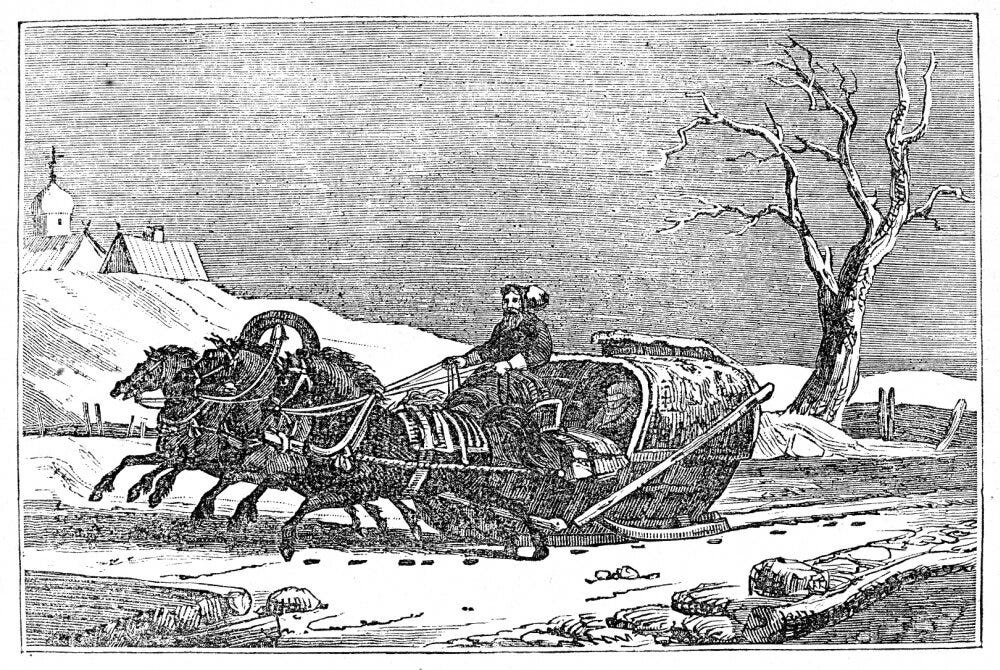
Не в свои сани не садись
Не (Negation particle)
This particle negates the adjective “свои”. “Не свой” means “not one’s own”, or “someone else’s.”
“Икра — предмет не свой, а купленный.” - М. Е. Салтыков-Щедрин
в (Preposition)
This preposition means "in" and indicates location or direction. It governs the noun "сани". Pay attention to the sound the preposition makes depending on the following consonant, whether it is “ringing” or “muffled”.
“Но в жизни все меняется быстро и живо…” - Н. В. Гоголь
”Дальняя родня увезла ее в свои деревни.” - Д. И. Фонвизин
свои (Possessive pronoun)
This possessive pronoun means "your own" or "one's own". It modifies the noun "сани".
“Свои взгляды на дело.” - Ф. М. Достоевский
сани (Noun)
This noun means "sleigh" and is in the accusative case, governed by the preposition "в". “Сани” is a plurale tantum, one of those words with no specific gender that appear in the plural form only (think of “scissors”).
“Военный садится в сани.” А. П. Чехов
не (Negation particle)
This particle negates the verb. It functions as an adverb modifying the verb "садись". There is no limit to the number of negations in a single Russian sentence. This proverb offers an example of double negation with the second "не" reinforcing the imperative.
садись (Verb)
This is an imperative verb meaning "sit down" or "get in". It's in the second person singular.
“И в карты не садись: продаст.” - А. С. Грибоедов
The collocation “не свой” is also used in fixed Russian expressions “сам не свой” and “не своим голосом”. Paying subscribers can read more about these collocations below.
