
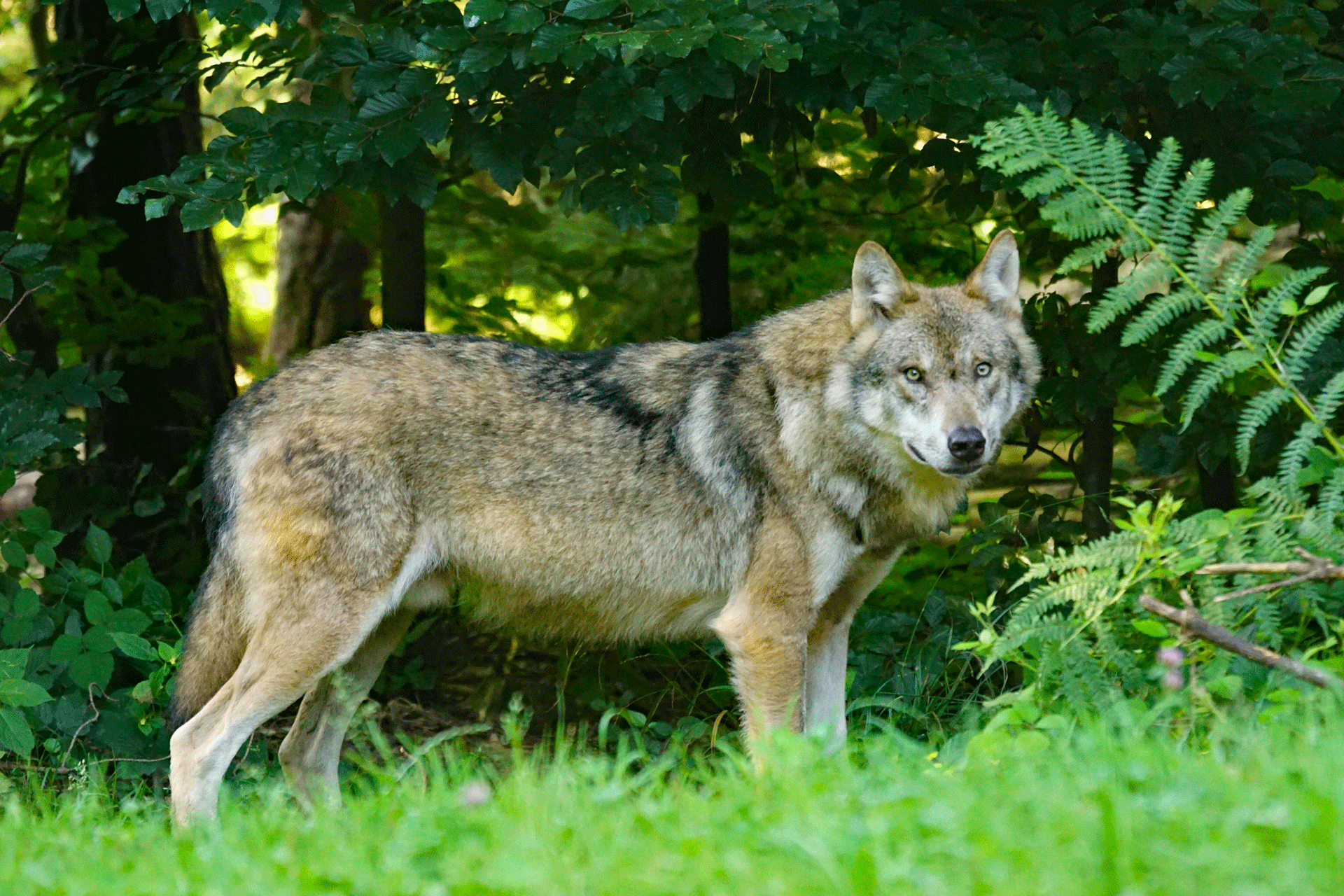
Сколько волка ни корми, он всё в лес смотрит
Staying with the "wolf" related proverb

Сколько волка ни корми, он всё в лес смотрит.
It translates to:
No matter how much you feed the wolf, it still looks toward the forest.
The proverb conveys a sense of giving up on someone. It is routinely used in negative connotation when someone feels that their help or support have been unappreciated by another person or entity.
Let’s read it word by word
Сколько - how much
Сколько can also mean how many in a quantifying sense.
Examples:
Но, сколько он ни ждал, никто не пришел. - М. Е. Салтыков-Щедрин
О сколько нам открытий чудных
Готовят просвещенья дух
И опыт, сын ошибок трудных,
И гений, парадоксов друг… - А. С. Пушкин, audio clip from the popular science Soviet TV show
волка - wolf (noun, masculine, singular, genitive case of волк)
Examples:
Пусть нас попрекают сладчайшей слезой,
но зайчика жалко и волка с лисой. - Л. Лосев
Волка ноги кормят - proverb
We have read that before:
ни - no matter (particle, introduces an emphatic or concessive condition)
Can also be used in negation ни… ни to emphasize total exclusion (neither… nor).
Example:
Ни свет ни заря, а он уже встал. (At the crack of dawn, he was already awake.)
”Ни свет ни заря” is a fixed expression meaning early hours of the day.
корми - feed (verb, imperative, second person singular, imperfective, nominative form: кормить)
Example:
При первом же взгляде на него являлось убеждение, что он голоден, но что, как его ни корми, никакая пища не пойдет ему впрок. - М. Е. Садтыков-Щедрин
Он - it (pronoun, masculine, singular, nominative case)
In Russian, the pronouns “он,” “она,” and “оно” are used for animals and objects, unlike “it” in English. The pronoun must match the gender of the noun. Paid subscribers can read more on Russian pronouns here:
Example:
Это он,
Это он,
Ленинградский почтальон. - С. Я. Маршак, audio clip from the Soviet animated cartoon “Почта” (Post, or Mail, depending on where you live)
всё - still (adverb, emphasizes persistence)
More often than not, the word “всё” stands for “everything”, or “all of it,” “the whole”. When used in the collocation “всё еще”, it means “still” or “yet”. Colloquially “всё еще” can be reduced to “всё” while retaining the same meaning.
Example:
Всё, что в жизни есть у меня,
Всё, в чем радость каждого дня,
Всё, о чем тревоги и мечты, -
Это всё, это всё ты. - В. Добрынин, Л. Дербенёв, performed by the Soviet band Самоцветы (Gemstones), 1976
в лес - toward the forest ("в" is a preposition meaning "in/to," followed by "лес," a noun, masculine, singular, accusative case)
Example:
Как грустный взгляд, люблю я осень.
В туманный, тихий день хожу
Я часто в лес и там сижу —
На небо белое гляжу
Да на верхушки тёмных сосен. - И. Тургенев
смотрит - looks (verb, third person singular, present tense, imperfective, nominative form: смотреть)
Examples:
Мальчик смотрит, белый пароходик
Уплывает вдоль по горизонту,
Несмотря на ясную погоду,
Раскрывая дыма чёрный зонтик. - Б. Поплавский
Music and performance by А. Вертинский (A. Vertinsky)
Как ваше имя? Смотрит он
И отвечает: Агафон. - А. С. Пушкин, performed by I. Smoktunovsky