
Что посеешь, то и пожнёшь
Continuing with the proverbs

In the previous post (Спасибо на хлеб не намажешь), I mentioned the prophetic qualities of Russian proverbs framed as generalized personal sentences. There's no explicit "you" in such sentences, though it is implied by the predicate in the second person and future tense. The use of the singular form makes the message sound both personal and generalized at the same time, as if it is adding a personal touch while conveying general wisdom.
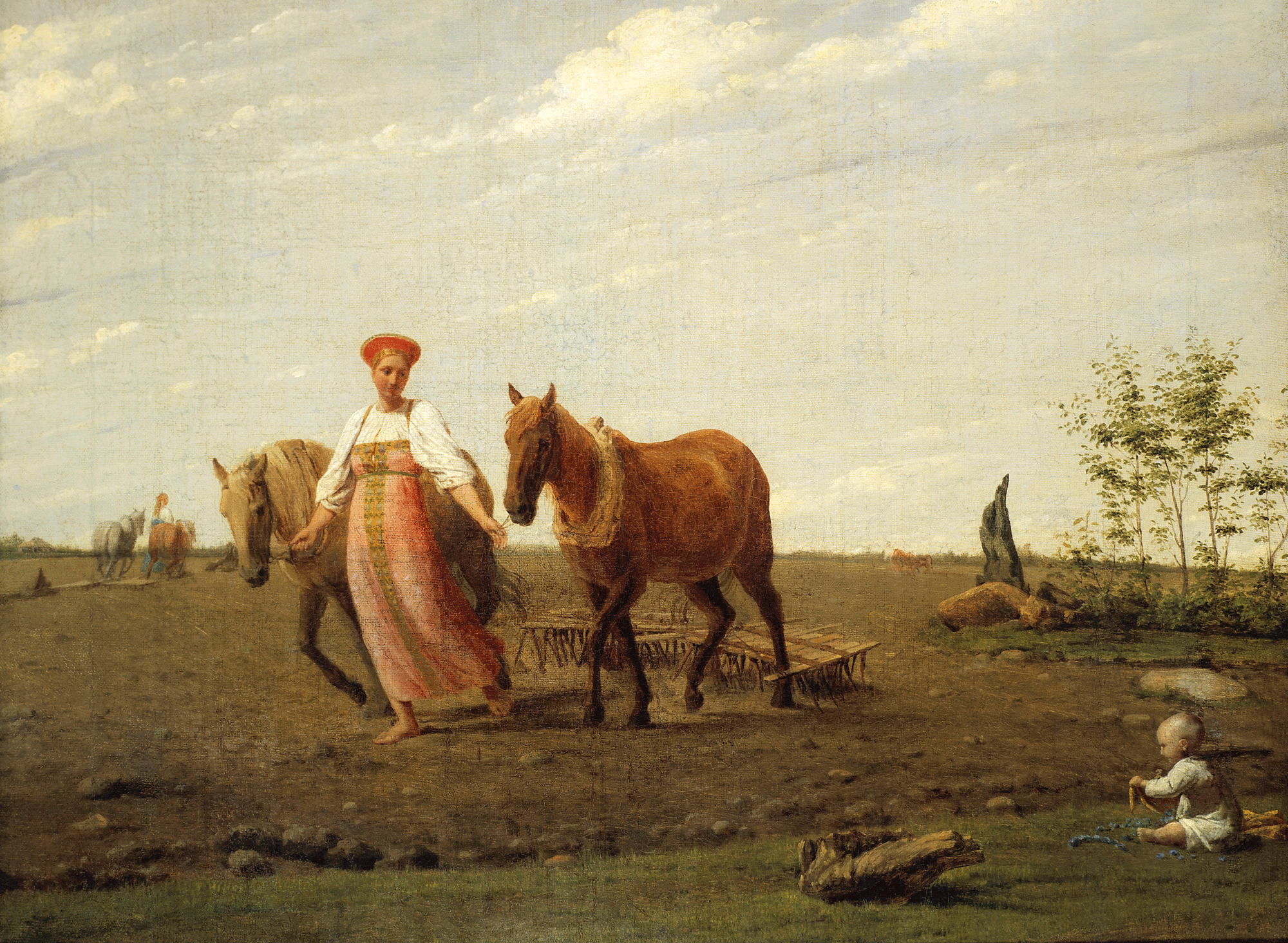
In the field. Spring. Aleksey Venetsianov, 1820-s
And today we have:
Что посеешь, то и пожнёшь.
It translates to "You reap what you sow" in English, or, word-for-word, “What you saw, that you’ll reap.”
The proverb reminds us of the consequences of our actions. Not surprisingly, it resonates with the teachings of various religions and philosophies.
Что – what (pronoun, nominative case, conjunction).
It is often used as a conjunction in complex sentences, meaning “what”, "that" or "which".
Examples:
Что с возу упало, то пропало. (What falls from the wagon is gone, old proverb).
Я не знаю, что сказать. (I don’t know what to say.)
The word “что” starts with the letter “Ч” which is generally responsible for the sound [CH]. In this case it generates the sound [SH] normally attributed to the letter “Ш”. You can read more about this in the ‘Что & Што’ article available to paid subscribers. Refer a friend to gain free access to the article.
Посеешь – (you, implied) sow (verb, future tense, 2nd person singular).
Examples:
Если ты посеешь картошку весной, осенью у тебя будет урожай. (If you sow potatoes in the spring, you'll have a harvest in the fall.)
Коль рождены на севере, —
Здесь нам и доживать.
Будем то, что посеяно,
Сами и пожинать. - А. Макаревич(Since we were born in the North,
It is destined for us to live here till the end.
What has been sown,
We will reap ourselves. - A. Makarevich
The words “сеять, посеять” can also figuratively mean "to spread" or "to cause" (e.g., "Посеять панику" – "To spread panic", or “Посеять страх” - “To cause fear”).
То – that, what (pronoun, nominative case, conjunction).
Examples:
Он сказал, то, что думает. (He said what he thinks.)
Люби лишь то, что редкостно и мнимо. - В. Набоков
(Love only what is rare and imaginary. - В. Nabokov)
The word “то” can also be translated as “then” or “therefore”:
Если пересчитать все буквы русского алфавита, то окажется, что их тридцать три.
(If you count all the letters of the Russian alphabet, then it turns out that there are thirty-three of them.)
И – and (conjunction; in this sentence it is used to intensify a phrase, similar to “indeed”).
Examples:
И умный же ты человек, а такие ошибки допускаешь. (You're a smart man indeed, but you make such mistakes.)
И как ты только справляешься со всеми этими задачами! (And how on earth do you manage all these tasks!)
Пожнёшь – (you implied) reap (verb, future tense, 2nd person singular).
Examples:
Посеешь привычку - пожнёшь характер. (Sow the habit, reap the character.)
Так как они сеяли ветер, то и пожнут бурю. - Книга пророка Осии, гл. 8, ст. 7
(For they sow the wind, and they shall reap the whirlwind. - Hosea 8:7)