
Гнать (to drive) - гонять (to drive around)
A pair of the Verbs of Motion

Russian has a special category of verbs called verbs of motion. These verbs often come in pairs: one verb describes unidirectional motion, and the other describes multi-directional, repeated or habitual motion. This time around, we will look at the difference between the seemingly identical verbs, at least, in their main meaning: гнать versus гонять.
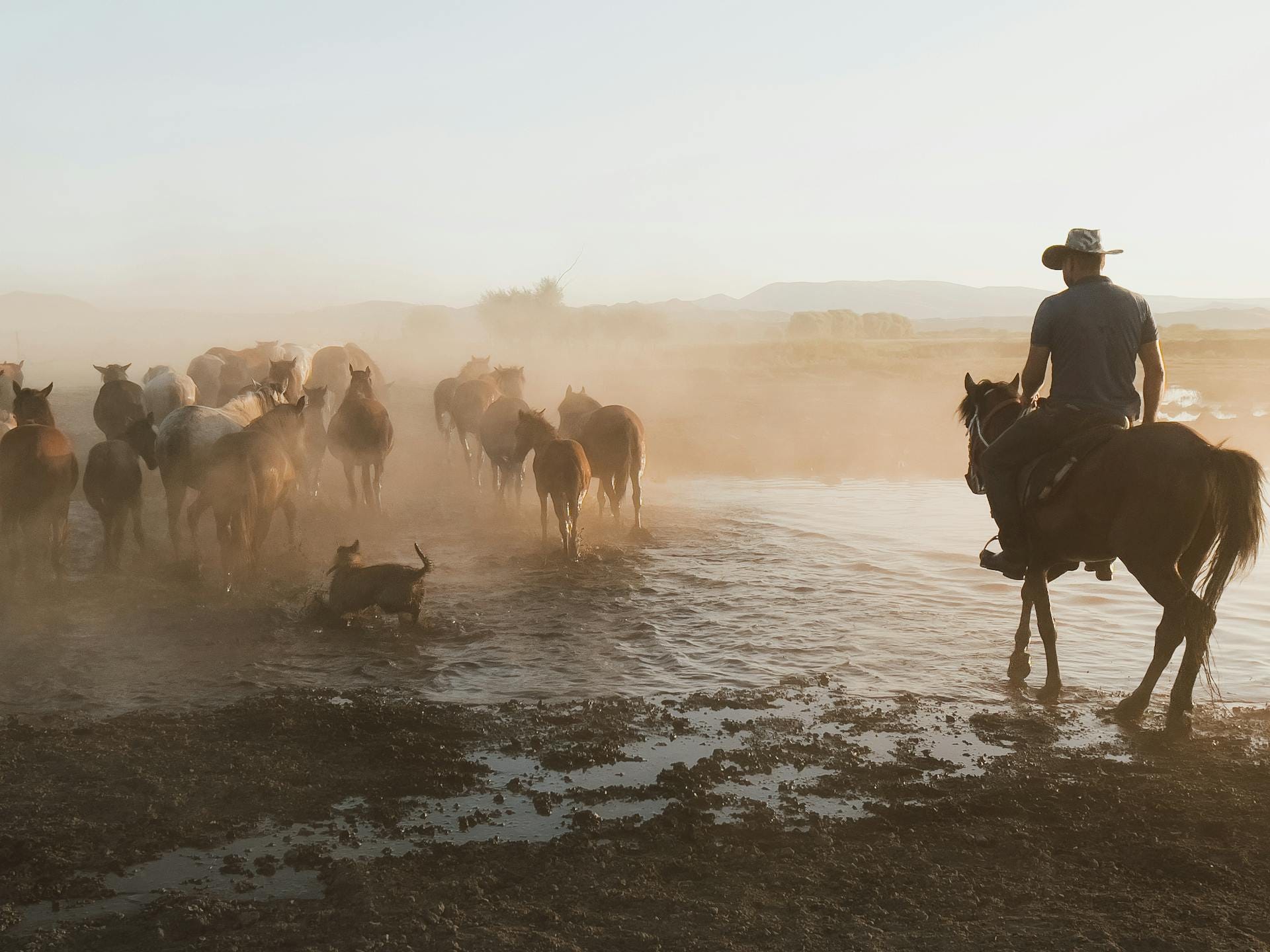
Photo by Mehmet Turgut Kirkgoz
Гнать
Гнать — imperfective verb of motion, unidirectional.
Basic meaning: to drive, chase, force something or someone to move in one direction (usually quickly).
Гони! is a single imperative form of the verb гнать.
Гоните! is a plural imperative form.
Examples:
Performance by Чиж & Co
Гони! Гони, Валентина, гони!
У тебя кайф, а не машина! Гони!
Ты видишь, Валя, я совсем не боюсь! - С.ЧиграковPush it! Push it, Valentina, push it!
You’ve got a blast of a machine! Push it!
You see, Valya, I’m not at all scared! — S. Chigrakov
Having no control over sites outside Substack, I will refrain from posting any links in the article and will include them here in my notes instead.
Гнать стадо. — To drive the herd.
Performance by I. Smoktubovsky
На утренней заре пастух
Не гонит уж коров из хлева,
И в час полуденный в кружок
Их не зовет его рожок… - А. С. ПушкинAt dawn, the shepherd
no longer drives the cows from the barn,
and at noon, his horn no longer
calls them to gather in a circle... - A. S. Pushkin
Гнать машину, мотоцикл, велосипед. — To drive the car, motorcycle, bicycle fast / push the speed.
Performance by A. Barykin
Я буду долго
Гнать велосипед.
В глухих лугах его остановлю.
Нарву цветов.
И подарю букет
Той девушке, которую люблю. - Н. РубцовI will ride fast my bike
for a long time.
I will stop it in the secluded meadows.
I will pick flowers.
And I will give a bouquet
To the girl I love. - N. Rubtsov
Гнать врага — To chase out the enemy
Он горячо гнал врага, невзначай попал на роковую пулю, да так и растянулся во весь свой богатырский рост, уткнув голову в ночной туман. - Д. Н. Мамин-Сибиряк
He was fiercely chasing the enemy when he was accidentally hit by a fatal bullet and fell flat on his mighty frame, his head buried in the night fog. - D. N. Mamin-Sibiryak
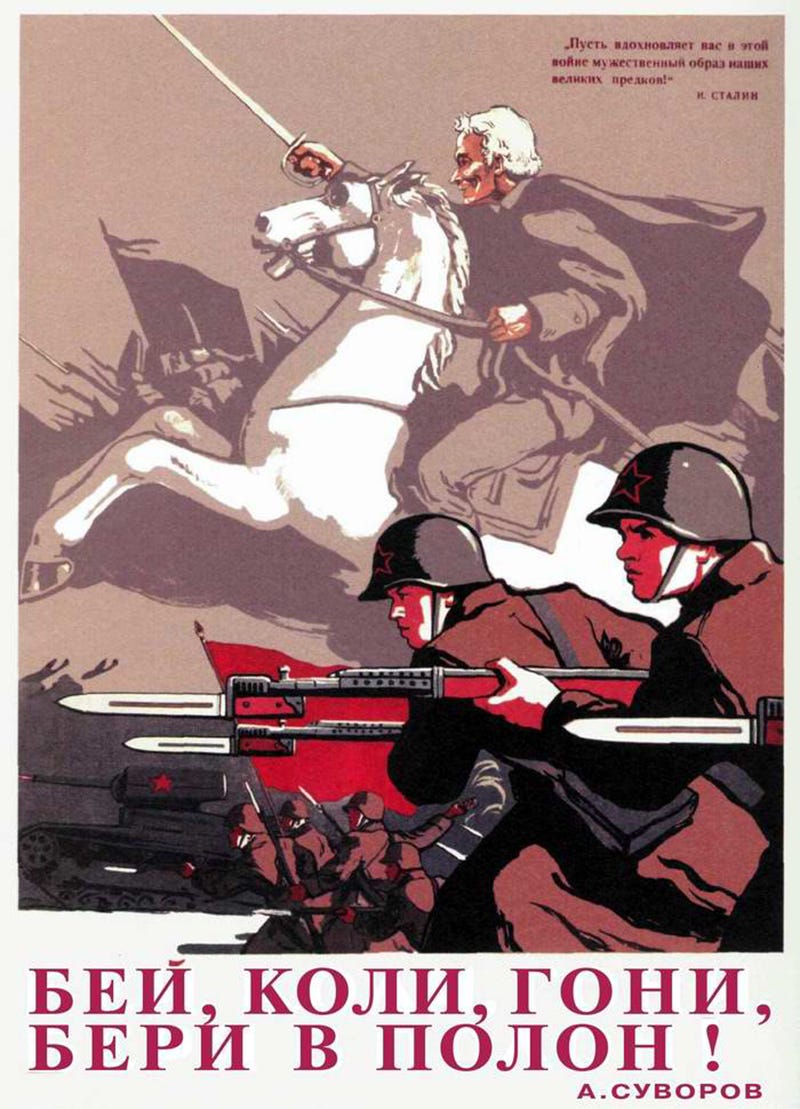
Soviet WWII propaganda poster paraphrasing the quote by A. Suvorov
Ударь в штыки, коли, гони, бери в полон! - А. Суворов
Strike with your bayonets, charge, take them prisoner! - A. Suvorov
Also, along with this meaning “to chase out” or “to push out,” one may hear “гнать в шею,” “гнать взашей,” and “гнать в три шеи.”
Гнать - to process, to refine
Люди по домам взялись гнать самогон. - Л. Гурченко
People started making moonshine at home. - L. Gurchenko
Дёготь гоним, уголь жгём. - М. Горький
We extract tar, we burn coal. — M. Gorky
Fixed expressions with the verb “гнать”
Гнать пургу, sometimes simply гнать — To talk nonsense, lie
Мне кажется, люди, утверждающие, что всё в жизни зависит от нашего выбора, просто гонят пургу. - Стивен Кинг, “Позже”, перевод Т. Покидаевой
I think that people who say life is all about the choices we make and the roads we go down are full of shit. - Stephen King, Later, translation by T. Pokidaeva
Ты гонишь. — That’s BS.
Что ты гонишь? — “What are you talking about?” / “Stop talking nonsense!”
Ты гонишь. Все говорят, что ты гонишь. - Не Замужем
You’re full of it. Everyone says you’re full of it. — Ne Zamuzhem
Гнать волну — To cause trouble, provoke
In fact, the main meaning of this expression is “to push, to drive the wave(s).”
Performance by Mashina Vremeni
И лёгкий ветер по морю гнал мелкую волну. - А. Макаревич
And a light wind pushed tiny waves over the sea. - A. Makarevich
But in slang, the expression means to stir up trouble, to get agitated, too loud, being noisy.
Не гони волну попусту. - Дарья Донцова
Don’t stir up trouble for nothing. - Daria Dontsova
Гнать план — To fulfill a production target (Soviet planned economy expression)
Кинотеатры гонят план:
Во весь экран «Фанфан-тюльпан». - А. РозенбаумMovie theaters are pushing the quota:
Fanfan la Tulipe on the big screen. — A. Rosenbaum
Гони деньги! - Give me the money! Pay up!
A scene from the film Afonya (Афоня), Mosfilm, 1975
Эй родственник! Гони рубль, родственник! Мне Афоня рубль должен… был.
Hey, relative! Hand over a ruble, relative! Afonya was supposed to owe me a ruble.
Thank you for reading all the way down to this point. The free part of the article covered the verb “гнать.” The rest of the article, which covers the pair-mate verb “гонять” as well as other deep dives into Russian grammar, is available to paid subscribers. Click the blue button to see the Christmas special offer.
To all my paid subscribers: I appreciate your support very much. Please enjoy reading the rest.
