
Волка ноги кормят
"Wolf" proverbs, part 2

The wolf has been an integral part of Russian folklore—featured in fairy tales, fables, and proverbs—up until now, when the archetype of the slightly dumb yet still dangerous predator found its place in movies and cartoons. But let’s stick to our proverbs.
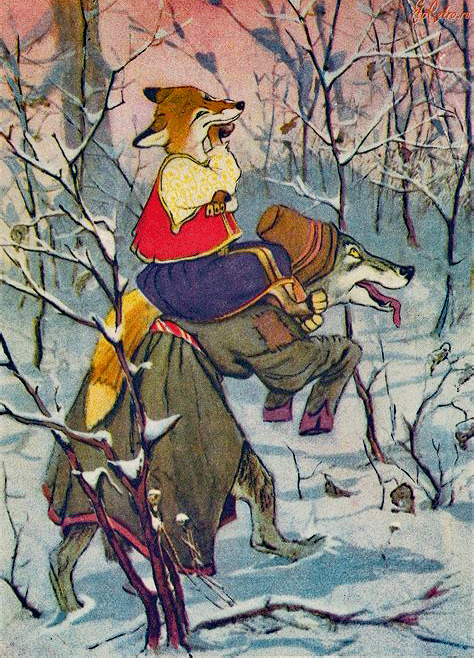
“Волка ноги кормят” translates to:
”The wolf is fed by its legs.”
This Russian proverb means that a wolf relies on its legs to survive, as it must constantly hunt for food. Figuratively, it implies that a person must be active and hardworking to sustain themselves and achieve success. The proverb is often applied to workaholics.
Волка - wolf
Analysis:
Part of sentence: Direct object (accusative case)
Part of language: Noun
Gender: Masculine
Declension: Singular, accusative case
Nominative form: волк
Examples:
“В темнице там царевна тужит,
А бурый волк ей верно служит…” - А. С. Пушкин
(“In a dungeon, the Tsarevna languishes,
And the brown wolf serves her faithfully…” - A. S. Pushkin)
The Russian Tsar (a derivative of the Latin “Caesar”) is the ruler of the land, equivalent to a King in other languages. The Tsaritsa, his spouse, holds the status of a Queen. Their heirs are referred to as the Tsarevich (Prince) and the Tsarevna (Princess).“Волков бояться — в лес не ходить.” (If you fear the wolves, don’t go into the forest.) We will get to reading that proverb word by word next.
ноги - legs
Analysis:
Part of sentence: Subject
Part of language: Noun
Gender: Feminine
Declension: Plural, nominative case
Nominative singular form: нога, plural form: ноги
Examples:
“Сама ложилась мята нам под ноги,
И птицам с нами было по дороге,
И рыбы подымались по реке…” - Арсений Тарковский“Он встал на ноги после болезни.” (He got back on his feet after the illness.)
”Встать на ноги” is a fixed expression having few meanings: “to get better after the illness”, “to recover from a misfortune”, “to mature”.
кормят - feed
Analysis:
Part of sentence: Predicate (main verb)
Part of language: Verb
Tense: Present
Person: Third person plural
Infinitive form: кормить
Examples:
“Сколько волка ни корми, он всё в лес смотрит.” (No matter how much you feed a wolf, it still looks at the forest). One more proverb about the wolf. We will get to it eventually.
“Покуда кормят женщины бродяг,
собак и кошек, прочих доходяг,
незыблема и в смутных временах,
стоит земля на трёх своих слонах.” - Наталья Ванханен
Fixed expressions with the word “кормить”:
“кормить обещаниями”, “кормить надеждами” (To string someone along with false hopes)
We have already read word by word another “wolf” related proverb, “Работа не волк, в лес не убежит”. You can find it here.

I have also put together a collection of Russian folklore books, including fairy tales, proverbs, and sayings, available in both bilingual editions and translations. You can order them online from Bookshop.org and support my work at the same time.
Please check the shipping and customs terms if your address is outside the U.S.A.